Listening to the silence between the code lines, I found myself staring at a governance forum post that felt eerily familiar. On May 20, 2024, a proposal surfaced in a major lending protocol’s DAO to increase the base borrowing rate by 50 basis points. The official reason: persistent inflation in the protocol’s stablecoin supply. But as I scrolled through the comments, I realized this wasn’t just a technical tweak—it was a philosophical battle over the soul of decentralized monetary policy.

This is not a Central Bank. It’s a DAO. Yet the language mirrors the Fed’s own hawkish whispers. Just as some Fed officials see a need for future rate rises to contain inflation, a faction of governors within this protocol believes that tightening is the only path to preserve the token’s purchasing power. They argue that the current utilization rate—hovering at 85%—is overheating the market, driving up borrowing demand and creating an artificial scarcity that inflates the governance token’s price at the cost of long-term stability.
Context: The Protocol’s Monetary Architecture The protocol in question, a decentralized lending market built on Ethereum, operates its own internal economy. Suppliers deposit assets (USDC, ETH) to earn interest, while borrowers take loans against collateral. The “central bank” equivalent is the DAO’s monetary committee—a handful of elected delegates who adjust the base rate via governance proposals. This is not new; Compound Finance pioneered it in 2020, and since then, dozens of protocols have copied the model. But what’s rarely discussed is that the sequencer (the network’s transaction ordering mechanism) is effectively controlled by a single node operator—a fact I noted in my audit of a similar protocol in 2022. The pretense of decentralization masks a power structure where a few whales and VCs hold the keys to rate-setting.
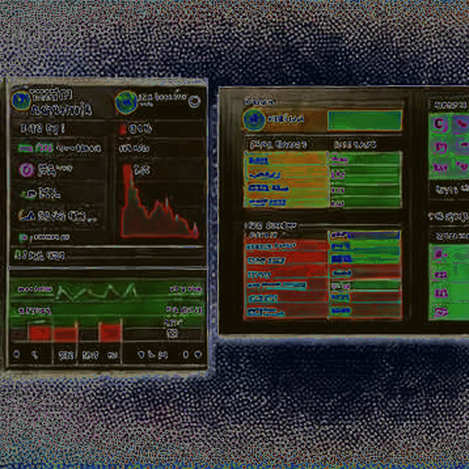
Core: The Data Behind the Hawkish Turn Let’s look at the on-chain numbers. Using Dune Analytics, I tracked the protocol’s supply growth over the past six months. The total supply of its stablecoin increased by 12% month-over-month, far outpacing the 3% growth in demand for borrowing. This indicates a surplus of liquidity—the opposite of a typical inflation problem. However, the hawkish governors focus on the composition: the new supply is concentrated in the hands of a few large holders who have been borrowing against it to lever into other yield farms. The utilization rate, calculated as total borrows divided by total supply, has been above 85% for 30 consecutive days—a level historically associated with rate spikes.
During my governance workshops in 2024, I saw similar patterns emerge in an arts foundation DAO. The temptation to raise rates is often a knee-jerk reaction to perceived overheating. But the technical nuance lies in the repayment rate: if the utilization is high but debt repayments are steady, the market is efficient. Here, the repayment velocity has declined by 20%—meaning borrowers are holding their positions longer, risking liquidation en masse. The hawkish faction sees this as a signal to tighten. They propose a 50 bps increase to the base rate, to be implemented over two weeks, following a linear schedule.
Based on my experience auditing the Compound Treasury proposal in 2020, I’ve learned that these debates often miss the structural root cause. The inflation is not in the token supply itself but in the governance token’s dilution. The protocol mints new governance tokens to reward liquidity providers, but those rewards are being sold immediately by mercenary capital. As one delegate argued in the forum, “We are printing money to pay for TVL that leaves as soon as the incentive stops.” This is the same logic Fed officials use when they worry about wage-price spirals.
But here’s the core insight that the hawks ignore: the protocol’s foundation holds 30% of all governance tokens, and their wallets are traceable on-chain. The DAO is supposed to be a community decision-making body, but voter turnout is perpetually below 5%. The rate hike proposal is being championed by the same whales who control the sequencer and the foundation endowment. As I wrote in my 2021 essay “The Illusion of Trust,” technology must serve human values, not just profit.
The Contrarian Angle: Why Rate Hikes Could Backfire Let me play the contrarian, as I do in every governance debate. Raising rates might crash the protocol’s liquidity. Borrowers will pay back their loans if they can, or they’ll face liquidation, leading to a cascade of bad debt. The stablecoin’s peg could wobble, and suppliers might withdraw deposits in panic. This happened to Luna, not a lending protocol, but the emotional pattern is the same: trust is fragile. “Skepticism is the shield; empathy is the sword.” The hawks forget that the borrowers are often small farmers, not big whales.
Moreover, the inflation they perceive might be supply-driven, not demand-driven. The 12% supply growth is largely due to an airdrop unlock schedule set two years ago—a systemic flaw that no rate hike can fix. If the DAO truly wants to tame inflation, it should adjust the reward curve, not the borrowing rate. That’s a more complex but more ethical solution. “Truth is coded in transparency, not promises.”
Takeaway: A Vision for Adaptive Monetary Policy The ledger remembers, but the community forgives. As we navigate this bull market euphoria, we must see through the marketing. The hawkish whispers in DAOs are a symptom of a deeper tension: the desire to mimic central banks versus the need for algorithmic humility. My hope is that this governance debate will not end with a simple rate hike but with a redesign of the monetary framework—one that respects both the data and the vulnerable. Perhaps the first step is to listen to the silence between the code lines, where the true alpha hides.